Let’s face it, this COVID-19 thing is giving everyone the willies. One moment you’re breathing fire and the next not breathing at all. You could be gasping for breath and realize that you haven’t put your dying thoughts down on paper. If you don’t, they could say anything about you and the world would miss all the highlights of your life that you want to make sure everyone gets to hear, see, read, file away, search the library of congress for and wonder at. So, as a semi-public service, herewith a pro-forma eulogy (not pro bono, I need the $10.00 to help cover the cost of my flowers) that will make sure you’ve covered all the bases and more importantly, whoever has the honour of pontificating your contribution to society, doesn’t wander off topic. Choices are indicated in the brackets; circle the appropriate response (accuracy is not the issue at this time – one tries to speak well of the dead) and leave this form where the cleaning lady won’t push it through the shredder.
Welcome to this celebration of the life of __________________. My name is _______________________ and I’m a (A. lifelong friend B. passing acquaintance C. cell mate or D. paid reader).
Needless to say __________________’s passing was a shock. (He – she ) was in the prime (411Included for those who were sensitive about their real age – 30 years sensitive., 71,73,79,83,89,97,101) of (his – her) life; full of vacuity, specious syllogisms, bibulous blatherings and memorable malapropisms.
This is an emotional time and I
understand if you can’t help but (A. weep B. laugh C. nod off or D. check your
e-mails).
A brief history for those here
today who just came in from the cold and/or for the cold cuts:
_____________________ was an exceptional baby, speaking at 3 months, reading at
1 and writing nudge-nudge, wink-wink memorable limericks while self potty-training.
A remarkable mind and a caring
soul that didn’t mind if you cared or not, _____________________, at an early
age saw where the automobile was heading and not stopping and talked (his – her)
(A. father B. mother C. care giver or D. maharishi) into funding a chain of car
repair shops that also sold car insurance thus guaranteeing the success of both
enterprises and his early retirement.
Rapidly accelerating through
public school, _________________ entered high school at the tender age of 10
and was teaching calculus in grade IX while correcting Latin papers when professor
Quid wasn’t out on parole. And for what, you may ask?
A superb athlete, __________ bested Olympic standards in such demanding activities
as the (A. slow walk B. painfully slow walk with gout C. juggling with two
balls or D. celebrating in an obnoxious manner ) and donated a trophy to the
school which, in addition to being a permanent recognition of __________ ‘s
rare achievement, doubles as a welcome doorstop.
Entering university,
___________was immediately selected to be a Rhodes Scholar for (his – her )
in-depth knowledge of (A. quantum mechanics B. automobile mechanics or C. mechanics
who can stop a Pinto from catching fire) and returned home with an honours
degree in (A. philosophy B. economics C.
economics as a philosophy or D. economical philosophy).
Sought after by the leading
companies in the world including (A. Dollarama B. Popeye’s or C. Joe’s Garage ‘We
specialize in Pintos’ ), ______________ went on to receive many recognized
accolades including (A. The Noble Prize for spelling B. Mad magazine’s Person of
the Year or C. the Key to the town of Mimico).
Before passing, ____________ was
working on a memoir with the working title ‘Working on a memoir.’ This preternaturally
pretentious autobiography, liberally illustrated with clip art, will be
posthumously published on a home printer and made available throughout metro
Toronto wherever you can find a Toronto Sun newspaper box. $1.00 per copy or a
brace for $5.00, the box has been adapted to accept either Canadian or US currency.
What a great opportunity to get rid of those Canadian pennies.
“In the land of the night the ship of the sun is drawn by the grateful dead.”
The (A. family B. friends or C. church’s janitorial crew) have asked,
instead of (A. suing B. throwing confetti or C. bad mouthing the departed) that
you make donations in (A. your B. your
ex’s or C. Donald Trump’s) name to the Lakeview Golf Club which will go towards
the purchase of a discontinued St. George’s golf cart to be permanently
stationed on the 12th fairway. The cart is operated by an LCBO motivational
speaker to the AA and will help players, who walk the course, get up the 32o
slope to the 12th green to putt their ball off the green and back
down to the fairway.
Thank you, now will you please all stand and join me in the singing a favourite of ______________ ‘s (A. there’ll be peace in the valley B. I go to pieces C. peaceful easy feeling or D. anything by the Grateful Dead).
When ordering the eulogy, please specify skid # 312.B
and make the e-transfer to:
Birthmark Cards – ‘When
you don’t care what you send.
“Welcome to ‘Insider information’, I’m your host, Jim LeGrand, and to-day we welcome Madison Hale as our guest
“Ms. Hale is a detective with the metropolitan police force; thank you for joining us Ms. Hale.”
“Happy
to be here.”
“Let’s
start with being a detective; what’s involved?”
“Well,
not much officially, in Canada you have to be 18 years or older and a Canadian
citizen.”
“So
there’s no Bachelor of Detecting?”
(Laughing) “No, that would certainly
simplify things.”
“Then
let’s turn to you; why did you get interested in this profession and what did
you do to become a detective?”
“Well
this wasn’t my life’s dream, if that’s what you mean. I graduated with a
science degree at university and guess I thought I’d end up in research or
maybe teach or do graduate work. I was at a bit of a loose end, actually, and
then I met my future partner in crime, excuse the pun, Jason, who had specialized
in criminology a year before me and I thought if this relationship becomes
serious I’d better learn a little bit about what he likes to do so I, too, took
criminology courses which pretty well means you’re headed for police work of
some kind.”
“Your
science background would suggest forensics.”
“Yes,
that was a possibility but maybe I was smitten by the imagined glamour of
detective work over the behind-the-scenes quiet of the laboratory.”
“What
was the next step?”
“Well,
Jason was employed by a police force, graduated from their academy program and
expressed an interest in detective work and started his career there. I
followed roughly the same path. From there it was putting in time, gaining
experience and working very hard; it’s a difficult profession. You have to do a
lot of research, understand the many disciplines involved in solving crimes and
put in long hours. And you have to like to solve problems; decide you think you’re
smarter than the bad guys, if you will. I’ve been a detective in the serious
crimes division now for thirteen years.”
“Glad
you mentioned solving problems. The public probably doesn’t know how successful
the police are in this regard. Would you please talk about that?”
“If you
go by the television police shows, we solve everything and can pretty well do
it in a day (laughing). The reality is somewhat less heady; dramatically
less than TV would like you to believe. Depending on where you are in the
world, the percentage of cases that go unsolved range anywhere from 40 to 80.”
“What
are some of the principal reasons you don’t solve a serious crime?”
“Assuming
we’re talking about murder, it varies but motivation is critical. For example,
if you, sorry Jim, but if you, on your way home tonight murdered a stranger on
the street and let’s assume you two were alone in a no-witness area, it would
be practically impossible to link you with the crime.”
“Other
factors?”
“Well,
missing a body complicates things.”
“But couldn’t
you be talking about a missing person?”
“Yes,
but a person who’s been missing for a while, whose case has received a thorough
exploration of all relevant factors, without a body you can assume the
individual is dead and had probably been murdered.”
“What
else?”
“Well, I
hate to say this, but incompetence can’t be ruled out. We just don’t do a
thorough enough job.”
“We
won’t dwell on that (smiling) but let’s turn to your experience. Can you
relate a case that tested you?”
“First
of all, I should explain that there are many professionals involved in trying
to understand what happens and I’m not the only detective in most cases. You
can get fixated on an approach and it’s necessary to have others challenge your
suppositions so you don’t miss key elements that could open things up. The case
I brought with me took place a few years back up in cottage country. You may
recall it, a couple were found shot in their cabin.”
“Ah yes,
the ‘last resort’ case, but I don’t remember the details.”
“An
unfortunate play on words. We were called in because there wasn’t a detective
division with forensic services locally.”
“Please walk us
through it.”
“When
you come to the scene of the crime, you try to take in as much as you can that
doesn’t seem to directly impact the victims. I look at the surroundings; try to
put myself in the killer’s shoes; how did he or she get here? Why here? How
come nobody saw anything? How easy would it be to commit the crime?
“Let me
interrupt, Jim, and explain I use ‘he’ for consistency and simplicity but
everyone should be aware that the guys aren’t the only ones with evil in their
hearts. To continue, you finally have to ask yourself, of course, why? Why the
killings?
“This
case was unusual for me, at least, because I couldn’t determine a motive; nobody
seemed to have anything to gain by the killings. When a partner is killed you
immediately suspect the other person in the relationship. I’d researched the
couple ahead of time and there was nothing to suggest they had enemies. Jackie
and Bill Friend were a very ordinary couple living a very ordinary life and spending
time at their cabin was a normal summer activity for them. Jackie stayed there
most of the summer with Bill driving up on the weekends. They were both killed
with a common gun, a Glock 17M, a standard issue used by the provincial police,
for example, and there were no signs of forcible entry nor any struggle by the
victims. It wasn’t a double homicide and no one in the area had any suspicions.”
“But
something obviously caught your attention.”
“A
couple of things, actually. First of all, could it be a professional killing? Everything
was too neat. An amateur gets sloppy, leaving clues everywhere. And secondly,
there was a disparity in their ages. She was mid to late forties but he was at
least ten years younger and, as it struck me at the time, quite handsome. He
had Hollywood looks while she had let herself go somewhat. Now, that doesn’t
mean anything normally, and they’d been married several years, but he travelled
a lot and I wondered how faithful he’d been.”
“But
they were both killed.”
Yes,
that I didn’t understand. Let’s say he was philandering and the wife suspected
something and had him killed. Then why was she shot?”
“Then
what happened?”
“Well,
not much, this is where the TV and the real worlds part. In most TV plots the
phone rings or somebody finds a note hidden in the freezer that leads to the
killer but we didn’t have any of that luck. We’d hit a dead end (no pun),
so we started to put together a picture of the husband’s life.
“Bill
Friend was a successful IT consultant with clients around the country
necessitating his travelling. His travels also took him to conventions and I
decided to start there; who attended these conventions?”
“Why did
you start there, why not with the clients?”
“For
practical reasons, there were a lot of clients and I was still on this
philandering approach and conventions, so the saying goes, if you believe the
Las Vegas ads, you get to meet people at conventions that you can leave at
these conventions; clients are a little more circumspect. So we contacted his
company and got the list of conventions he’d attended in the last five years
and from the conventions, got the list of attendees.”
“Why
five years?”
“We were
looking for attendees who kept showing up at these conventions. In other words,
were these the rendezvous points?”
“But
wouldn’t the same names show up often?”
“Indeed,
but then the detective work kicks in. And the numbers drop quite a bit when
you’re looking for women. And we were looking for attractive, single women in
their thirties that lived here.
“We
narrowed the search down to three possible suspects: Carol Bell, Samantha Adams
and Rosanne Dewitt.”
“Sorry,
but I have to come back to this, why would the femme fatale, who, say, wants to
knock off the wife to get the husband, kill the husband?”
“Good
question, you have a future after television.”
“But,
not to get ahead of ourselves, we had to break down the background of the three
suspects. All three were single, attractive, knew Bill, successful
professionals who lived in the city and were linked in various capacities to
the IT industry. And most unfortunately, none of them were solid suspects to do
the killing.”
“So this
supports your theory of a professional killer.”
“Yes,
one of them would have had to engage someone to kill Bill or Jackie Friend.”
“So, how
do you engage a professional killer?”
“Good
question and the answer is, ‘Not easily. They don’t staple their resumés to
telephone poles.
“But
this helped us; who would have the possible connections to hire a killer? We
now looked more deeply into their backgrounds so we brought them all in for
questioning.
All
three admitted that they’d had an affair with Bill and all three were shocked
at his death. We decided they weren’t acting; they were truly emotionally upset
so that ruled them out initially, in our mind, as the killer.
“Carol
Bell, one of the suspects, had a grandfather who fought in the second world
war. Sepp Krafft was captured by the British and turned to act as a double
agent. This would give her a plausible link to a professional hit man.
“Samantha
Adams only met Bill at the conventions that were held in Las Vegas. Las Vegas,
as you can imagine, or know, has a lot of acts with skilled performers and
marksmen are a popular act so Samantha could have easily made friends with
someone who could handle firearms.
“Rosanne
DeWitt, on the other hand, didn’t seem to have any obvious connections with a
professional hit man. We drew a blank with her as a suspect.”
“But you
solved the case.”
(smiling)
“Again, I have
to explain that luck enters into it. I believe it was Louis Pasteur who said, ‘Chance
favors the prepared mind.’ So, I dragged Jason into this
and we tried to re-enact the crime.
“If we were right and it was a crime of
passion, and one of the women wanted to get rid of Jackie and have Bill to
herself, then the hit man was to kill Jackie, not Bill. So let’s assume that’s
what happened, during the week, when Jackie was alone at the cabin, the hit man
killed Jackie. Done. But, you may well ask, ‘what about Bill?’
“And Jason had an idea, someone wanted to
kill Bill, not Jackie. There was a woman scorned. Only a man would figure that
angle. So, when Bill went up on the weekend, the hit man killed him.”
“You mean there were two hit killings?
Unbelievable.”
“Not so fast. Logically it would take incredible
co-operation and luck between two hit men to pull this off but the idea that
there were two distinct murders was compelling.
“We started with Samantha.
“We broke down each of her visits to Las Vegas to see if
there were any events that could suggest a tie to a shooter. There were no
stage shows but there was a major gun show during one of her visits. Las Vegas
is an attractive destination if you’re interested in firearms. Las Vegas and
the state of Nevada are, to put it politely, gun crazy. There are gun shows
held regularly, a gazillion shooting ranges and, by our standards, lax guns
laws: you do not need a permit to buy a gun, rifle or shotgun in Nevada; you do
not need a permit to possess a rifle, gun or shotgun in Nevada; semi-automatic
guns are legal in Nevada as are fully automatic guns.
“We sent an undercover team to Las Vegas to attend one of the
larger gun shows to determine if it would be possible to hire someone. The
quick answer is, ‘yes,’ but it’s a qualified, ‘yes’. People are naturally
suspicious and reluctant to be open about such an idea, even when a lot of
money is involved. But the team came away with an idea of what it would take to
hire a hit man; close to $US 100,000. So that gave us the idea to see how
financially well off Samantha was and issued a summons to seize her financial
records.
“Samantha was financially sound but neither had the cash nor
assets to liquidate nor family connections to cover the sums involved. And we
assumed it would be a challenge for her to get a loan and disguise its purpose.
That would leave a loan shark which we dismissed so we cooled on Samantha as a
strong suspect.
“Unless Rosanna DeWitt was the
killer, herself, we had pretty well ruled her out based on her background
checks so we focused on Carol Bell.
“We felt confident Carol was somehow
involved because of her grandfather and her phone calls to him around that time
so we arrested her on suspicion of conspiracy to murder. In Canada the Crown needs
only prove that there was a meeting of the minds with regard to a common design
to do something unlawful.
“We felt we had enough circumstantial evidence and we also wanted
to put pressure on her.
“Jumping ahead, after several interrogations where we
presented witness’s testimony that confirmed Carol’s almost blind infatuation
with Bill followed by details of her phone conversations with her grandfather, under
advisement of her lawyer, Carol confessed to conspiracy.I’ll read from her testimony:”
My
grandfather, who’s still alive at 94, never lost contact with his war time comrades
so when I went to him with my plan he reluctantly agreed to give me a name,
Walther Model, a person, he said, who had saved his life during the war and
that’s the person I contacted to have Jackie Friend killed. Walther hired a
professional hit man, Franz Boas.
I
provided all the details and $US 25,000 up front with $US 25,000 on completion
of the assignment.
Walther
left a message that Franz had killed Jackie and I wired him the balance.
“But, we
haven’t addressed Bill’s death.”
“No, so
we went back to our other suspects, Samantha and Rosanna, to see if we had
missed anything and went through all their records to try to somehow connect
them with a killer or put them at the cabin at that time.
“We looked
at everything during the period in question: airline passenger checks; passport
checks; rental car records; even did forensics on their own cars; we examined credit
card records, phone records, anything we could think of that would link them
with the crime but nothing surfaced. We even distributed pictures of them
throughout the town. We were stumped.
“So on a
hunch, I contacted Carol’s lawyer to give him a heads up that we were going to
subpoena Carol’s grandfather. This broke things open.”
Carol couldn’t
see her grandfather suffer and, negotiating through her lawyer, said she had
further information if we would drop the subpoena and agree to a lesser
sentence for her. We agreed and I’ll read the continuation of Carol’s
testimony.”
“The
next day, when I found out on the news that Bill had been shot, too, I
immediately contacted Walther.
“He
said, when Franz got there, he found this man on the floor, evidently a burglar.
Jackie, who was sitting dazed in a chair, had dropped the gun by her side. Franz decided it would cause less suspicion
if he killed Jackie with her own gun.”
Epilogue
Jackie’s dad, a retired Superintendent
with the provincial police, discovered the bodies and recognized the gun he’d
given his daughter.
Carol Bell was sentenced to life
for conspiracy to murder. In return for her testimony, the sentence was reduced
to eighteen years. Carol’s eligible for parole in ten years.
Madison and Jason Hale are still active
as detectives and live with their three daughters in a small town just outside
metropolitan Toronto.
Franz Boas returned to his native
Austria. Canada does not have an extradition treaty with Austria.
“Not a good sign, reading the
obituaries. I don’t know the name, should I?”
“She won an Olympic gold medal a while
back.”
“Can’t say that I remember.”
“You might recall that she was the one
who disappeared after the Olympics and later on brought down a member of
parliament. And it was all planned.”
“Oh I vaguely recall now, what exactly was
behind that anyway?”
“It’s quite a story. Kathy was a sharp
gal as well as a top athlete. Once she won the Olympic gold, she announced that
she was going to travel and didn’t return to Canada with the other members of
the Olympic squad. The government, and Jimmy Martin MP in particular, started
to raise a stink about how much the government had invested in the Olympic
program and its athletes and how the athletes should return to show their
gratitude and wave the flag. And that’s when Jimmy Martin and the government
got into hot water. They started to bad mouth her, singling her out. Kathy,
through her lawyers, successfully sued Jimmy Martin for defamation of character.”
“Oh yes, I do remember, but how was it planned?”
“It goes back a bit. Kathy’s grandfather,
George Fergus, had started a lumbering operation in British Columbia way back
when. He was quite successful and planned to grow his business but his bid to
get additional logging rights was turned down by the government at that time.
The minister responsible, Ted Martin, had been bought off by a competitor of
Fergus’s, Colin Sedgwick. Ted Martin had a taste for the good life that his
salary couldn’t support.
“Kathy’s grandfather didn’t have the
connections to expose the corruption but there was a lot of ill will and he held
a grudge against both the Sedgwicks and Martins and made it known he’d get back
at them. This is what Kathy grew up with and Kathy’s mother, who was raising a
family and helping with the business at the time, fuelled the fires of revenge
through Kathy.”
‘But nobody could plan to win a gold
medal.’
“Quite right. Kathy was a superb athlete
and it took a lot of work plus luck but she became a champion rower. At the
time Kathy was exploring a lot of ideas on how to avenge her grandfather. Her
first thought was to go after the Sedgwicks. She once had fanciful visions of walking down
the aisle with one of the grandsons and then bringing down their business. It
turned out, however, that the lack of romantic interest was mutual so that plan
died.
“So Kathy next turned to the minister’s
family where there was a grandson, Jimmy Martin, and she couldn’t bring herself
to show any romantic interest in him either. But Jimmy had political ambitions,
just like his grandfather, and this is where Kathy thought there was an
opportunity and where she focused her energies.”
‘Why wouldn’t Jimmy be suspicious of
Kathy?’
‘Benoit, of course, was Kathy’s father’s
name. Since she didn’t carry her mother’s name, Jimmy didn’t make the
connection between Benoit and the running feud his family had had with George
Fergus.
“Jimmy was self important at an early
age so it was fairly easy for Kathy to pump up his ego. She encouraged him to
become a member the debating team and run for school council. She followed him
to university and, with her encouragement, he got involved in the university
political scene. At this time Kathy’s athletic career blossomed and she started
to win provincial rowing events setting national records. This started her
thinking about how she could set him up to bring him down. Jimmy made it a lot
easier by showing a romantic interest in Kathy and she encouraged it. When she
was picked for the Olympic team she had her plan.
“Jimmy was making a name for himself in
politics by that time and his plans included Kathy. This is what Kathy had
hoped for so when Jimmy proposed, she turned him down flat and, as she suspected,
Jimmy never got over it. So the scene was set, Kathy, with her mom’s financial
help through the company, made sure that every government related cost
associated with her Olympic journey was paid for and Jimmy was primed to dump
on Kathy for dumping him. When Kathy disappeared, Jimmy was quick to denounce
her for wasting tax payers’ money. Kathy, through her lawyers, showed the
country she had financially made it to the Olympics on her own. Jimmy had to pay
plus leave a promising career in politics.”
“Wow, so she avenged her grandfather.”
“Well, partly, there were still the
Sedgwicks to deal with. And this, too, is an interesting story.
“Frank Sedgwick, a dour but crafty Scot,
had emigrated to Canada and done well in logging on the west coast.
“The fact that Frank had once resorted
to bribery probably suggested a vulnerability that had passed its way down
through the generations. The great grandsons, who had grown up in the business
Frank had started and now ran the company, were running into rough times like
the rest of the industry so they weren’t above considering deals that would
help them survive. And they were probably well aware of, and maybe even a bit
proud of, the history of how the clan got an early jump on the competition.
“The story goes the Sedgwicks were approached
by a ministry of lands and forest advisor on the QT who said that, for a price,
there was a way to open up native lands for logging. The advisor was working
directly with a senior government official who agreed to clear the paper work
for a bribe. The advisor took them to the track of land in question and showed
them a breakdown of the forestation. The Sedgwicks liked what they saw. It
wasn’t going to be cheap but the Sedgwicks calculated that it could easily turn
a profit. The advisor gave them a week to decide.
“Now the Sedgwicks weren’t born
yesterday and did their homework. The lands in question were protected by a treaty
but the natives didn’t inhabit or use the land. Also, there was some question
about who actually owned the lands, the natives or the government. And there
had been public pressure to open them up to logging. Lumber mills were being
abandoned at that time and the government had to support several of them to
keep employment up so any plan that saved the lumber industry was going to be
popular. And once the ownership had been changed to the Sedgwicks, it would be to
up to the natives to disprove it and that would take a lot of time and money.
By then the Sedgwicks would have made a handsome return.
“What clinched the deal for the
Sedgwicks was the admission by the advisor that he was having trouble
supporting a lifestyle he enjoyed and needed to find ways to supplement his
income. They knew all about that first hand; they had dealing with corrupt
officials in their blood.
‘True to form, the Sedgwicks gave the
advisor his price plus the bribe to pass on to the senior official.
“When they started logging operations, however,
the natives quickly organized, became militant and brought things to a bitter
standstill. This opened up the issue and once the details of the deal became
public, the government vehemently denied having anything to do with it and
started an inquiry which stopped the logging in its tracks. The Sedgwicks never
recovered.”
“Well, well, so in a way old man Fergus
did get his revenge but Kathy wasn’t a part of that.”
“No, not directly, but the advisor, once
he got his money, like his mother, disappeared.”
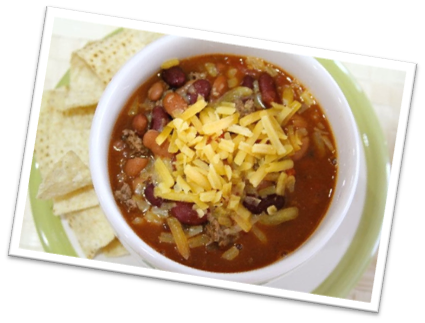
I season my lunch, the meal I’m usually eating on my own, with a pinch of reading. Which typically takes the form of whichever package is gracing the table at that time. An example: today it’s soup for lunch and looking for substance, I grab a bag of Farm Boy crackers. They’re NATURAL tortilla chips, a flavour I don’t embrace but drowning them in the soup helps me get over them. The NATURAL, in capitals, in not my doing; the manufacturer obviously doesn’t want you to miss the point, ‘These are not unnatural tortilla chips, my friends, these come from a well loved and watered tortilla tree that lets nature do all the work.’ Or some version thereof.
On to reading the bag, this is
mid-May, 60 days into the heart of the COVID-19 pandemic and you’re still not sure
if you’re going to get it so you medicate yourself by staying indoors where
everything is safe and then you notice that this NATURAL product you’ve got
swimming in your soup, these make-believe Mexican marvels, are well past their
due date.
I know there are stories about
people getting in a fret when something is one day past its best by date but even
though my crackers are at least a month too old, I suspect they’re as fresh now
as they ever were and will ever be. But it does get you to wondering: do I go
out and breathe my last breath or stay in and eat myself to any early ending?
Has to qualify for the lose-lose award of the times.
The other flag that has been
raised recently in the news is reading the barcode to see if whatever you’re
embracing was made in China or elsewhere; the elsewhere supposedly being the
better place. You can find this list easily on the internet but for the purpose
of keeping your attention, 690 – 695, are the first three digits that tweek
your sino-phobia. So I hurriedly grab the bag and adjust my eyes to the fine
print to see a leading 0.
Phew!
But not so fast, who claims the
leading 0? Ah, either Canada or the good old US and A. Saved. And, while
spooning my just-best-by bouillon, I search for other positive feedback on the
bag to affirm that I’m staying healthy eating these now soggy saltines and zoom
in on an item that says, ‘Made in Canada from domestic and imported ingredients,’
so I’m not out of the woods yet, the particles that kill the moment you pass the
best by date could be the imported bits and, wait for it, not from the US and
A, but from China. Aghhhhhh!
Hard to get your head into this,
though. Maybe it could happen, let’s suppose, when Farm Boy decides, on a slow
day, to get into the made-in-Canada-from-domestic-and-imported-ingredients NATURAL
(their capitals) tortilla chip manufacturing business, because it’s May and sales
of their made-somewhere NATURAL Christmas cakes are slowing, and the brain
trust wonders what it would take to make these darn things better than the
other guys’, does this picture appear before their dreaming eyes?
“Dr.
Mildred Bentworthy, you’re our chief nutritionist, these are great but I think
a dash, a soupçon if you will, of product X would get these to fly off the
shelves; if you’re on side with this, who in the world supplies product X?
China? Cool, I’ll put in a call for a couple of shipping containers of the
stuff. Have the containers power washed just to be safe and remember to update
the packaging to indicate ‘Made-in-Canada-from-domestic-and-imported-ingredients,’
and slap on a country Canada barcode.”
Could this be? Doesn’t the barcode say, ‘Canada’? A little digging on the internet indicates (Are you sitting down?) that these codes do indeed don’t 1 With apologies to, ‘Yes, we have no bananas.’ tell the truth, the whole truth and nothing but the truth.
There are two bodies that
designate country codes so you’ve no idea which code you’re trying to translate
and secondly, the code could indicate a country of manufacture not origin. So this
NATURAL, their capitals, Canadian tortilla
chip creation, while doubtless China free, could easily have been stirred
together in purified Canadian air with the appropriate country of Canada bar
code but could also have realistically absorbed, thanks to some tasty other
imported ingredients from California say, the smog that smothers Los Angeles with
no revealing asterisk on the barcode.
Funny how things change.
I glance at the bag’s Nutrition
Facts table as I chase the last of clumps running around the bowl, just curious,
to see where the big numbers are: Fat, Sodium and Carbohydrate; killers all. A
year ago, these would have kept me quickly carting past this aisle in the
grocery store.
So today you have a choice, you
can feel sorry for yourself because of: A. COVID-19 or B. xenophobia or C.
malnutrition.
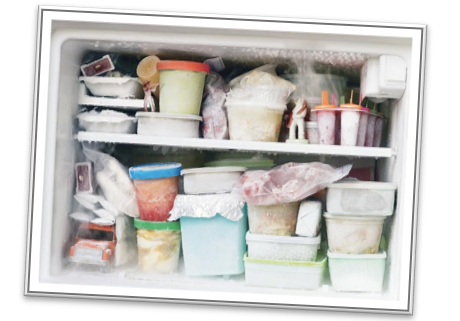
Let’s pause for a moment. Granted men
aren’t much for small talk but opening with, “do you have a freezer?”
gets one to thinking:
He has a freezer to sell or
Worse, he has a freezer to
store or
He wants to cram something into
my freezer, but:
He didn’t check that, if I had
a freezer, there was room for the side of beef he won in a lottery and
He’s a snowbird in Florida
Well, my puzzlement was soon answered once
I gave a positive response.
“Great, I want you to go to the golf
club and pick up some meat.”
Typical request one gets nowadays; back
came the puzzlement.
It seems that private golf clubs impose a quarterly minimum charge for food and drinks which is normally not an issue if you happen to be within driving range (pun intended) of the golf course.
During the golf season, you eat up that
charge easily after a game and/or a dinner or two but when you’re golfing in
Florida in the off season, the golf club in Toronto just can’t accommodate you
easily, if at all – you have to get your buns to the club for that hot dog.
But, here’s the killer, the irretrievable
ball in the water, if you will; they charge you for what you don’t eat. A
banker would call it credit float; a golf member calls it extortion.
But Gord, ever the calculating one, confirmed that if he indeed picked up the food, food he’s basically paid for, it would be covered by his quarterly minimum. Clever. Really clever when he doesn’t have to pick it up.
Flash forward a month: it’s in the middle
of an Ontario February, a February that sensitive Canadians in Florida celebrate
by turning up the air conditioning and turning on the international weather
channel. Gord has my visit set up and I’m to make my way to the golf course to
pick up his frozen food on such and such a date. And we’re not talking Kraft
Dinner, dear reader, Gord wouldn’t entrust racks of lamb and steaks to just
anybody. Well, anybody with a freezer.
Putting four sets of chains on my 4 x 4 and taking out a CAA1Canadian Automobile Association one day membership, I venture forth. “Who, besides a friend with a freezer, would be out in a record setting blizzard?” I ask myself wondering why the heater has just stopped working. Well, shiver me timbers, it seems there are a lot of people out, a lot of people who had obviously set their GPSes to find the golf club’s parking lot.
I’m now snow-shoeing without snow shoes
from the last parking spot at the back of the lot to the clubhouse. As I look
back to try to remember where I parked, my ‘tank’ is slowly disappearing from
view under a blanket of snow.
“Hi, I’m a friend of Gord’s who asked me
to pick up some meat for him.”
The maître d’ eyes me
incredulously, “You came out on a night like tonight for a friend. What
silly bet did you lose?”
“Well,” trying
to justify my presence and clapping the snow off my mittens while noting that
I’m not wearing boots, “it seems I’m not the only friend to come out
tonight, the parking lot’s full. What happened?”
“Ah,” came
the all-knowing smile, “they’re members, you’re the only friend.”
“And why,” I
stupidly ask, “are they here?”
“End of the month,” the fitted jacket with the name tag Pierre replied.
“Pierre,” I rolled
off my tongue and into two syllables, suspecting that everyone knew him as
Pete,”I still don’t understand.”
My eyes moved slowly upward focusing on the
cartoon balloon forming over Pierre’s head that said, “Ah, those unfortunate
to appreciate the finer things in life, how droll, I’ll humour him, he could
become a member, dread the thought, just the type to call me ‘Pete’.”
“Sir, I’m sorry, I didn’t get your
name.”
“Rogé,” I
pronounced suavely, two can play this game.
Mystified, Pierre continued, “You see,
there’s a quarterly charge for hospitality and if, you unfortunately don’t, how
shall I put it, hospitalityize, you can’t roll over those charges.”
“You’re out the money,” I summarized not correcting his spelling.
“Exac – te- ment,” warmed Pierre, getting into the swing of things and thankful, for
once I’m sure, to meet one of his own.
“Well, Pierre, it’s been a pleasure meeting
you, is the order ready?”
“Let me check,” and Pierre disappeared behind the swinging doors into the kitchen
which gave me the chance to look around the room and survey the members who looked
like they were questioning their sanity and mentally revising the cost of a
round of golf upward.
Not a smile did I see nor any lobster nor
glasses pairing it with Dom Perignon. You got the impression that they didn’t
want to overshoot their credit balance. Ah well, nice to know that those in the
heady financial bracket who get to enjoy a private game of golf now and then probably
got there in part by counting their pennies.
“Voilà,” announced Pierre, re-entering and off-loading a large, heavily laden brown paper bag onto my braced arms. “Et, bon appetit.”
“Thanks, Pierre, but it’s not for me.
I’m just doing Gord a favour.”
“Ah well then, knowing Mr. Gordon as I
do, he’ll probably want to share it with you,” waved
Pierre, punctuating it with a Gallic wink.